
If you have naturally straight hair, creating curls that last can feel challenging. You may curl your hair in the morning, only to find that the shape becomes loose or disappears within a few hours.
The key to learning how to make straight hair curly is not simply using more heat. Long-lasting curls depend on preparation, section size, styling technique, and enough time for the hair to cool and set.

Prepare Your Hair Before Curling
Curls hold better when the hair has the right texture and foundation. Start with clean, fully dried hair, but avoid making it overly soft or slippery with heavy products.
Follow these preparation steps:
-
Use lightweight products to wash and condition your hair.
-
Gently towel-dry without rough rubbing.
-
Apply a heat protectant evenly from the mid-lengths to the ends.
-
Dry your hair completely before using a curling tool.
-
Add a small amount of volumizing or styling product if your hair is very smooth or fine.
Hair that is still damp may not hold its shape properly. On the other hand, overly oily or heavily conditioned hair can make curls fall faster. A light, flexible base gives the hair better grip while still allowing natural movement.
Create Volume Before Adding Curls
Straight hair often needs volume at the roots before it can hold a full curl. If the roots remain flat, the entire style may look heavy and lose its shape quickly.
Use airflow to lift the roots while drying. Direct the airflow against the natural direction of the hair and gently lift the roots with your fingers or a round brush.
Focus especially on:
-
The crown
-
The sides of the head
-
The area around the face
-
The roots at the back of the head
Creating volume first gives the curls more support. It also helps prevent the finished style from looking flat, even after the curls begin to relax.
Choose the Right Section Size
The size of each section has a major effect on the final result.
Smaller sections usually create tighter, more defined curls. Larger sections create softer waves, but they may be more difficult to shape and may drop faster, especially on very straight hair.
For a balanced, natural result:
-
Divide the hair into several manageable sections.
-
Start with the lower layers and work upward.
-
Take consistent sections instead of grabbing large, uneven pieces.
-
Use smaller sections around the face if you want more definition.
-
Keep the section size similar throughout the styling process.
Consistent sections allow heat and airflow to reach the hair more evenly. This creates a more uniform shape and prevents some curls from becoming loose while others remain tight.
Curl the Hair With Controlled Tension
Once the hair is prepared and divided, begin shaping each section. Keep the hair smooth and gently controlled as you work, but avoid pulling too tightly.
Wrap or guide the section around the curling attachment, allowing the hair to form its shape gradually. Hold the section long enough for it to respond to the heat and airflow, but do not rely on excessive heat to create durability.
For a natural-looking finish, alternate the curl direction:
-
Curl sections away from the face around the front.
-
Alternate directions through the rest of the hair.
-
Leave the ends slightly softer if you prefer relaxed, modern curls.
-
Keep the sections moving in a consistent rhythm.
The goal is to shape the hair evenly rather than repeatedly exposing the same area to high heat.
Allow Each Curl to Cool and Set
One of the most important steps in learning how to make straight hair curly is allowing the shape to cool before touching it.
Hair is more likely to keep its new shape after it cools. If you immediately brush, stretch, or run your fingers through a fresh curl, the style may loosen before it has time to set.
After styling each section:
-
Allow the curl to cool in its shape.
-
Use cool airflow if your tool provides it.
-
Avoid brushing or separating the curl immediately.
-
Let the entire head cool before finishing the style.
-
Gently loosen the curls with your fingers once they are set.
Cool airflow helps finish the styling process and can make the curls feel more structured without adding more heat.
Why Straight Hair Curls Often Fall Out
Several common habits can make curls disappear quickly:
-
Styling hair before it is completely dry
-
Using sections that are too large
-
Skipping root volume
-
Applying too much heavy product
-
Touching or brushing curls while they are still warm
-
Using high heat without a proper setting step
Traditional curling irons mainly focus on shaping the hair. They may not help with drying, root lift, or cool-air setting, so the results can vary depending on the condition of the hair and the styling technique.
How Nuvy Care Helps Create Longer-Lasting Curls
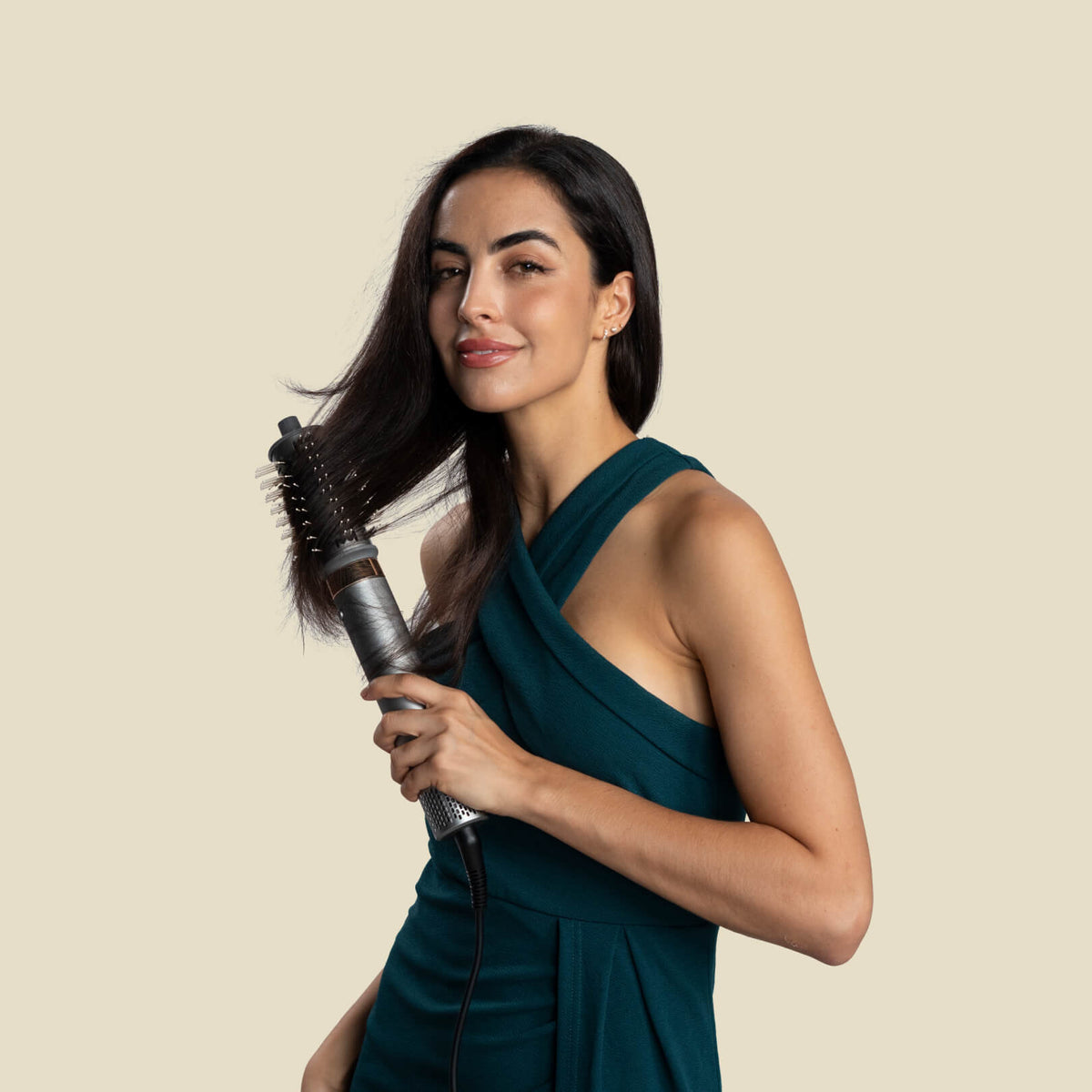
The Nuvy Care 5-in-1 Air Styler is designed to support the complete styling process in one system. Instead of focusing only on the curling step, it combines preparation, shaping, smoothing, and setting.
Its functions can help with:
-
Drying the hair with controlled airflow
-
Creating volume at the roots
-
Shaping hair in smaller, controlled sections
-
Smoothing the hair before and after curling
-
Using airflow to help cool and set the finished shape
This integrated approach makes it easier to follow the same sequence used in professional styling: prepare the hair, build volume, shape each section, and allow the curl to set.
Finish With a Light Touch
Once the curls have fully cooled, gently separate them with your fingers. Avoid over-brushing, especially if your hair is naturally straight and tends to lose shape easily.
If needed, finish with a light, flexible hairspray. Choose a product that provides hold without making the hair stiff or heavy.
The most effective way to make straight hair curly is to treat curling as a complete process rather than a single step. With fully dried hair, controlled sections, root volume, and cool-air setting, you can create curls that look softer, fuller, and more likely to last throughout the day.
Share:
Can Electric Shavers Cut You? Common Causes and Safer Technique