
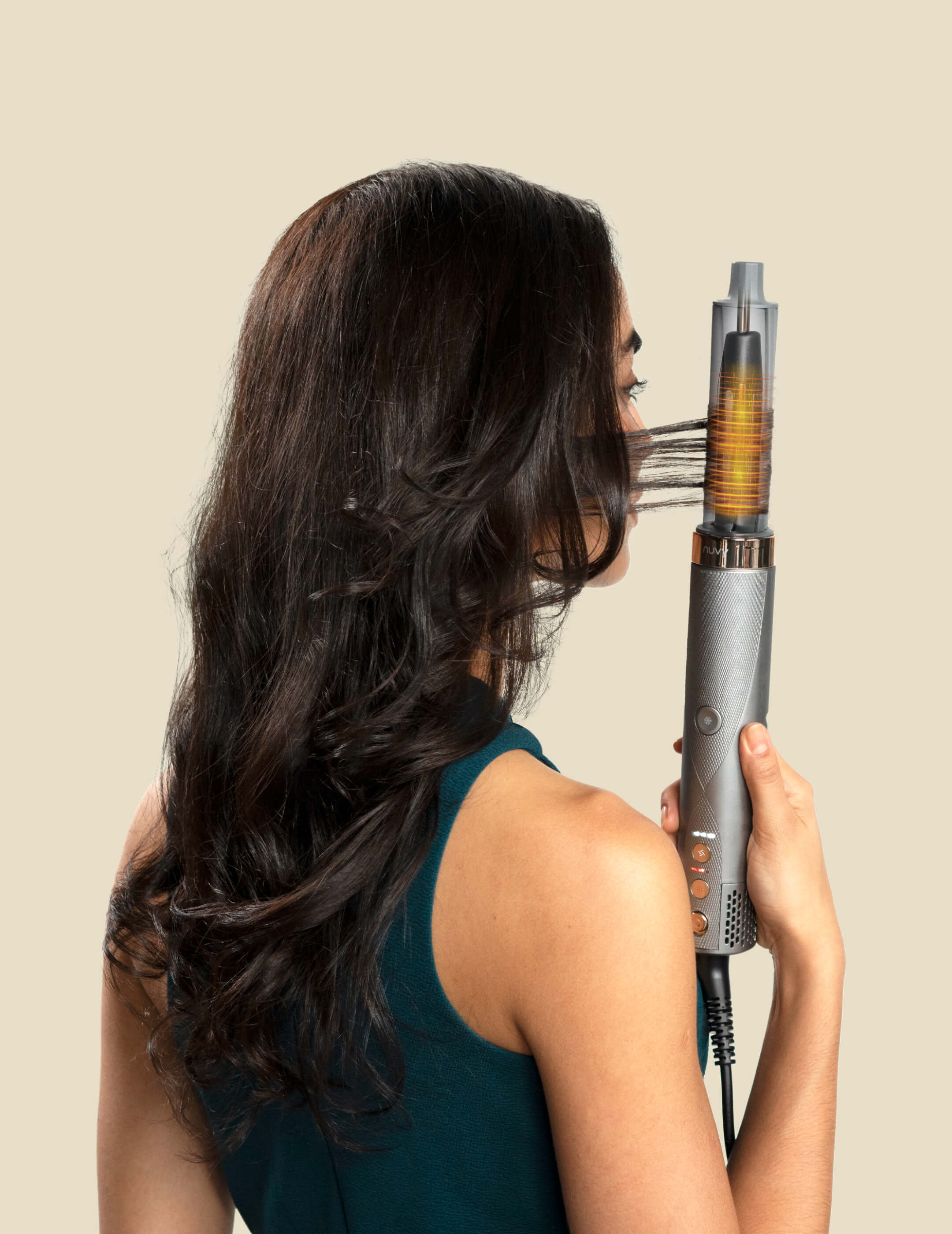
2B hair sits between straight and fully curly hair. It has a natural wave pattern, but it often behaves unpredictably—sometimes looking flat at the roots, sometimes becoming frizzy at the ends, and rarely holding a defined shape for long.
This is why many people with 2B hair feel like their styling results never fully match what they see in salons or online tutorials.

What 2B hair actually means
2B hair refers to a wavy hair type with a loose “S” pattern that becomes more visible when the hair is air-dried. Unlike straighter hair types, 2B hair already has movement, but it lacks consistent structure.
The main challenge is not creating waves—it is controlling definition, volume, and frizz at the same time.
Why 2B hair is hard to style
Most styling issues come from how 2B hair reacts to weight, moisture, and airflow:
-
The roots often fall flat due to natural oil distribution
-
The mid-length wave pattern can collapse without structure
-
Ends tend to frizz when exposed to inconsistent heat or drying
-
Over-styling easily disrupts the natural wave pattern
Because of this, simple curling or straightening rarely produces stable results.
How professionals approach 2B hair
In salon environments, stylists rarely treat 2B hair as something to “force into shape.” Instead, they work with its natural movement through a controlled sequence:
-
First, they remove excess moisture using directional airflow rather than aggressive heat
-
Then they build root volume before defining any wave pattern
-
Styling is done in controlled sections to maintain consistency
-
Finally, airflow is used again to set the shape without disrupting texture
The key difference is that salons focus on structure before styling, not just the styling itself.
A more practical way to style 2B hair at home
To improve results at home, the process should follow the same logic:
Start by working with hair that is not overly flat or overly damp. 2B hair responds best when it has slight natural texture.
Next, focus on root lift before defining waves. This helps prevent the collapsed look that often happens after a few hours.
When shaping, avoid trying to completely “change” the natural wave. Instead, enhance the existing pattern by working with consistent sections and controlled movement.
Finally, allow the hair to settle before touching or separating it. This helps maintain shape without breaking the wave structure.
Why most tools struggle with 2B hair
Traditional styling tools often treat hair as if it behaves uniformly, but 2B hair is highly sensitive to airflow direction, heat balance, and timing.
Most devices only handle one part of the process—either drying, curling, or smoothing—but not the full sequence. This creates inconsistency, especially for naturally wavy hair types.
A simpler workflow approach
For 2B hair, consistency matters more than intensity. What works best is a system that maintains stable airflow and supports multiple stages of styling without switching tools repeatedly.
The Nuvy Care 5-in-1 Air Styler is designed around this idea. It combines airflow-based drying, volumizing, smoothing, and curling functions in one system, helping reduce the variation that usually happens when multiple tools are used separately.
For people with 2B hair, this kind of integrated workflow can make styling more predictable by keeping airflow and shaping conditions consistent throughout the process.

Share:
Best Electric Shaver for Sensitive Skin | Complete Buying Guide 2026
How to Make Curls That Actually Last Longer