
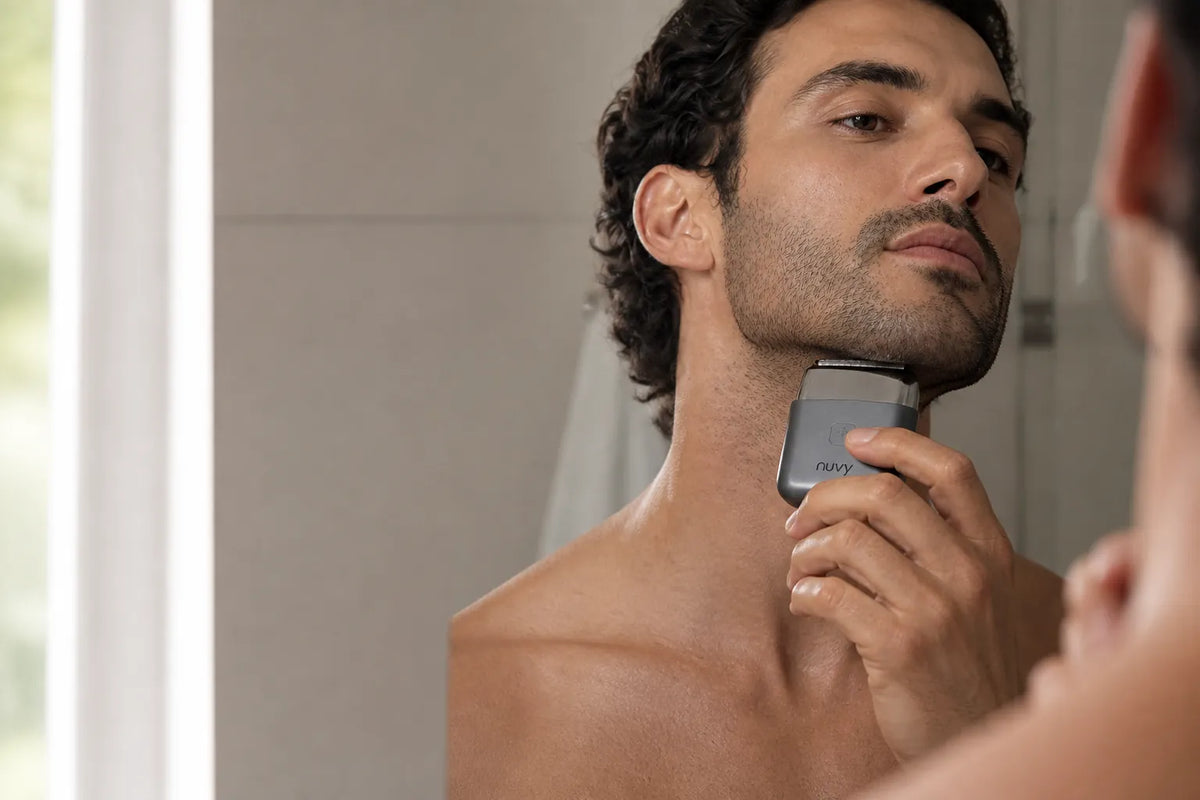
Best Electric Shaver for Coarse Hair: Features That Actually Matter
The best electric shaver for coarse hair is not simply the model with the biggest motor or the closest-shave promise. It is a shaver that can keep its cutting action consistent through dense stubble, maintain even foil-to-skin contact around curves, and stay easy to control with light pressure. Add a sensible preparation routine and regular cleaning, and those features matter far more than a long list of modes.

What Coarse Facial Hair Changes About Electric Shaving
“Coarse” describes the diameter and stiffness of each hair. “Dense” describes how many hairs grow in an area. You can have thick individual whiskers in a light beard, fine hairs in a dense beard, or both coarse and dense growth. That distinction matters because a shaver may need to cut firm hairs while also clearing a large volume of stubble.
Growth direction is the other half of the problem. Coarse or curly beard hair often changes direction beneath the jaw and on the neck. A fast straight pass can glide over flat-lying hairs, while repeated passes over the same patch can create warmth and friction. The useful question is therefore not “How powerful is this shaver?” but “Can its cutting system capture my beard pattern while I keep the head in stable contact?”
Longer growth also changes the job. Foil openings are designed primarily to admit short stubble. If several days of coarse beard growth has become long enough to bend or lie flat, pre-trimming is usually more efficient than forcing a foil shaver through it. Think of the trimmer as the length-reduction step and the foil as the finishing step.
Best Electric Shaver for Coarse Hair: 8 Features to Compare
A useful buying checklist connects every feature to a real shaving task. The table below separates practical value from specifications that sound impressive but reveal little on their own.
| Feature | Why it matters for coarse hair | What to check |
|---|---|---|
| Foil and cutter design | Firm whiskers need clean entry into the foil and an effective cut beneath it. | Even foil surfaces, protected cutters, and a head suited to your usual stubble length. |
| Stable power delivery | A shaver that slows under a dense patch may tug or require extra passes. | Consistent sound and cutting feel as the head moves from cheek to jaw. |
| Floating head contact | Movement helps the foils follow the chin, jaw, and neck instead of bridging over curves. | A head that flexes predictably without feeling loose. |
| Controllable head size | Wide coverage is useful on the cheek; precision matters under the nose and along the jaw. | A shape you can keep flat without awkward wrist angles. |
| Wet/dry compatibility | Some users prefer dry speed; others like warm-water preparation or shaving cream. | Use only the methods the manufacturer specifically allows. |
| Easy cleaning | Dense stubble fills the head faster and trapped debris reduces effective cutting contact. | Accessible foils and a rinse-safe design if stated by the maker. |
| Replaceable wear parts | Dull or damaged foils and cutters can turn a good shaver into a pulling shaver. | Clear maintenance instructions and parts guidance. |
| Comfortable grip | Control makes light pressure and short passes easier to repeat. | A secure hold in the shaving orientation you actually use. |
1. A cutting system that matches short, firm stubble
Do not judge a foil by the word “thin” alone. The foil must protect the skin while allowing hairs to enter the perforations, and the cutters beneath it must move cleanly. Inspect the foil before each shave. A dent, rough edge, or visible hole is a stop sign, not a reason to press harder.
2. Power that stays consistent under load
Motor speed matters only when it translates into steady cutting. Listen and feel: if the shaver noticeably labors on a dense section even after cleaning and charging, pause instead of pushing. A slow, dry, or clogged cutter can pull a coarse whisker before cutting it.
3. Floating contact around facial curves
A floating head helps keep the active cutting surface in contact as the angle changes. It cannot replace technique. Move slowly enough for the head to adapt, and reposition your wrist at the jaw rather than tilting until only an edge touches the skin.
4. A size you can place precisely
More cutting area is not automatically better. A compact foil head can be easier to place beneath the nose, beside a mustache, and on the narrow transition from jaw to neck. The better size is the one you can keep flat on both broad and tight areas.
5. A wet/dry choice that fits your routine
A dry shave is quick and makes it easy to see the grain. A compatible wet shave may suit people who prefer warm-water preparation and a lubricating product. Check the manual first: waterproof construction and wet-use permission are product-specific, and a device should never be assumed rinseable.

6. Cleaning access you will actually use
Coarse, dense stubble can quickly pack the space below a foil. Follow the manufacturer’s opening and cleaning instructions, avoid tapping a delicate foil against the sink, and allow washable parts to dry as directed before reassembly. Cleaning frequency depends on the product and your beard, but visible buildup or a change in sound is a prompt to act.
7. Clear foil and cutter maintenance
Replacement intervals are not universal. Beard density, shave frequency, care, and the specific cutting system all affect wear. Follow the device instructions, replace damaged parts immediately, and investigate a new pulling sensation rather than accepting it as normal for coarse hair.
8. Grip and pressure control
Pressure cannot make the foil openings larger or the cutters sharper. It mainly compresses skin into the foil and adds friction. A shaver that sits securely in your hand lets you guide the head with minimal force and repeat the same angle on both sides of your face.
Foil vs. Rotary Shavers for Coarse Hair
Neither layout wins for every coarse beard. Foil shavers use reciprocating cutters beneath straight perforated foils. Their linear shape can make short, deliberate passes and edge control intuitive. Rotary shavers use circular cutting heads that can approach multi-directional growth from changing angles. Actual performance depends on the individual model, stubble length, face contours, and technique—not the category name alone.
Choose based on a small real-world test if possible. A foil design may suit someone who shaves short stubble frequently and values a compact, easy-to-align head. A rotary design may feel natural to someone who prefers circular movements across complex grain. In either case, a clean sharp cutting system and light pressure are more important than trying to force the “wrong” motion onto your beard.
For coarse hair specifically, keep the comparison anchored to capture, stable power, contour contact, cleaning, and control. Category labels are a starting point; how the cutting head behaves on your normal stubble is the useful test.
Match the Shaver to Your Beard Pattern
- Dense, uniform short stubble: prioritize stable cutting performance, a useful head width, and fast cleaning access.
- Wiry or flat-lying neck hairs: prioritize contouring and the ability to approach the patch from its actual growth direction with short passes.
- Coarse, curly growth: map the grain carefully and avoid chasing extreme closeness. Closely cut curled hairs can turn back toward the skin in people prone to razor bumps.
- Fast growth or irregular shaving days: keep a separate pre-trimming option for longer beard growth rather than asking the foil to do two jobs.
- Skin that becomes uncomfortable easily: favor predictable control, few passes, light pressure, and a routine you can repeat without rushing.
A 7-Step Electric Shaving Routine for Coarse Hair
1. Decide whether the beard needs pre-trimming
Run your fingertips over the beard. If the hairs bend, lie flat, or extend beyond the length your foil shaver is designed to capture, trim them evenly first. This is especially useful after several days of growth. Do not force long strands into the foil.
2. Map the grain once, then remember it
Use a mirror and observe the direction of growth on the cheeks, chin, jaw, and both sides of the neck. The pattern may form whorls or reverse under the jaw. Divide the face into zones instead of using one direction everywhere.
3. Prepare for dry or wet use
For a dry shave, make sure the beard and shaver head are dry unless your manufacturer directs otherwise. For a wet routine with a compatible shaver, soften the hair with warm water and use a suitable shaving product. The American Academy of Dermatology recommends wetting skin and hair to soften them and shaving in the direction of growth. Its guidance for people prone to razor bumps also advises light pressure, short strokes, and avoiding stretched skin.
4. Start with the easiest zones
Begin on a flatter cheek where you can establish the right pressure and pace. Hold a foil head flat, not balanced on one edge. Let the cutting system work for a moment before moving to the denser chin and variable-grain neck.
5. Use short passes with the grain first
Move in the local direction of hair growth, lift the shaver, and reset. If your skin tolerates it and the manufacturer permits, a second cross-grain pass can address remaining texture. Avoid repeatedly polishing one patch in search of perfect glass-like closeness.

6. Check with your hand, not repeated scraping
After a pass, switch the shaver off and feel the area gently. Different directions can make the same hair feel longer or shorter. A small missed patch may need a new approach angle; it does not automatically need more pressure.
7. Clean and dry the shaver as directed
Remove trapped stubble after the shave, using only the cleaning method approved for the device. Inspect the foil, replace the cap when dry, and store the shaver where the cutting head will not be crushed. For more fundamentals, see how to use an electric shaver and our guide to wet vs. dry shaving.
When the Problem Is Technique or Maintenance—not Power
Before replacing a shaver, check for simple causes. Pulling can come from long growth, a clogged head, worn cutters, a damaged foil, low charge, moving too fast, or holding only the foil edge against a curve. Missed neck hairs often point to grain direction or poor contact rather than insufficient motor power.
Stop if the foil is damaged, the shaver becomes unusually hot, or the mechanism sounds abnormal. Consult the product instructions and support rather than opening parts that are not intended for user service. If the shaver cuts normally on the cheek but misses one neck patch, remap that patch and change approach direction. Our electric shaver troubleshooting guide walks through these checks in more detail.
How the Nuvy Nova Shaver Fits a Coarse-Hair Routine
The Nuvy Nova Shaver combines a high-speed motor, three floating blades, an ultra-thin foil, smart power regulation, and a 45-degree cutting angle in a compact foil design. Those are relevant features for maintaining contact and consistent cutting through short, dense stubble; they are not a substitute for trimming growth that has become too long or for following your beard’s grain.
Nova is rated IPX7 and designed for wet or dry use, so you can choose the preparation style that fits your skin and schedule. Its compact frame is also easier to position in tight areas and pack for travel. As with any electric shaver, results vary with beard pattern, skin, preparation, maintenance, and technique.
A practical way to decide
If your priorities are compact foil control, floating contact, wet/dry flexibility, and easy rinsing, explore the NuvyCare electric shaver collection. Judge the fit against your normal stubble length and shaving frequency—not against a one-pass promise.
Frequently Asked Questions
What is the best electric shaver for coarse hair?
The best electric shaver for coarse hair has a clean, effective cutting system, stable power under dense stubble, a head that maintains contact around curves, easy cleaning access, and a grip that supports light pressure. Match those features to your usual beard length and growth direction rather than choosing by motor claims alone.
Is foil or rotary better for coarse hair?
Neither is universally better. A foil shaver can make short, controlled linear passes easy, while a rotary shaver may feel natural on multi-directional growth. Model quality, beard length, contour contact, maintenance, and technique matter more than the category alone.
Should I trim coarse facial hair before electric shaving?
Yes, if the growth is longer than your foil shaver is designed to capture or the hairs bend and lie flat. Pre-trim to a short, even length, then use the foil shaver for the finishing pass. This can reduce pulling and unnecessary repeat passes.
Can I wet shave coarse hair with an electric shaver?
You can wet shave only when the manufacturer explicitly approves wet use. Warm water and a compatible shaving product may help soften coarse hair, but follow the device instructions for products, rinsing, and drying. Never assume an electric shaver is waterproof.
Why does my electric shaver pull coarse hair?
Common causes include growth that is too long, a clogged head, worn cutters, a damaged foil, insufficient charge, moving too quickly, or poor contact on a curve. Stop and inspect the shaver rather than adding pressure. Follow the maker’s cleaning and replacement guidance.
How often should I replace the foil and cutters for a coarse beard?
There is no universal interval. Follow the manufacturer’s schedule because beard density, shave frequency, cleaning, and the specific cutting system affect wear. Replace damaged parts immediately and investigate new pulling, roughness, or reduced performance.
Share:
Best Styling Tools for Short Hair: Volume, Waves, and Smooth Finishes
Best Hair Straightener for Thick Hair: Features That Actually Matter