
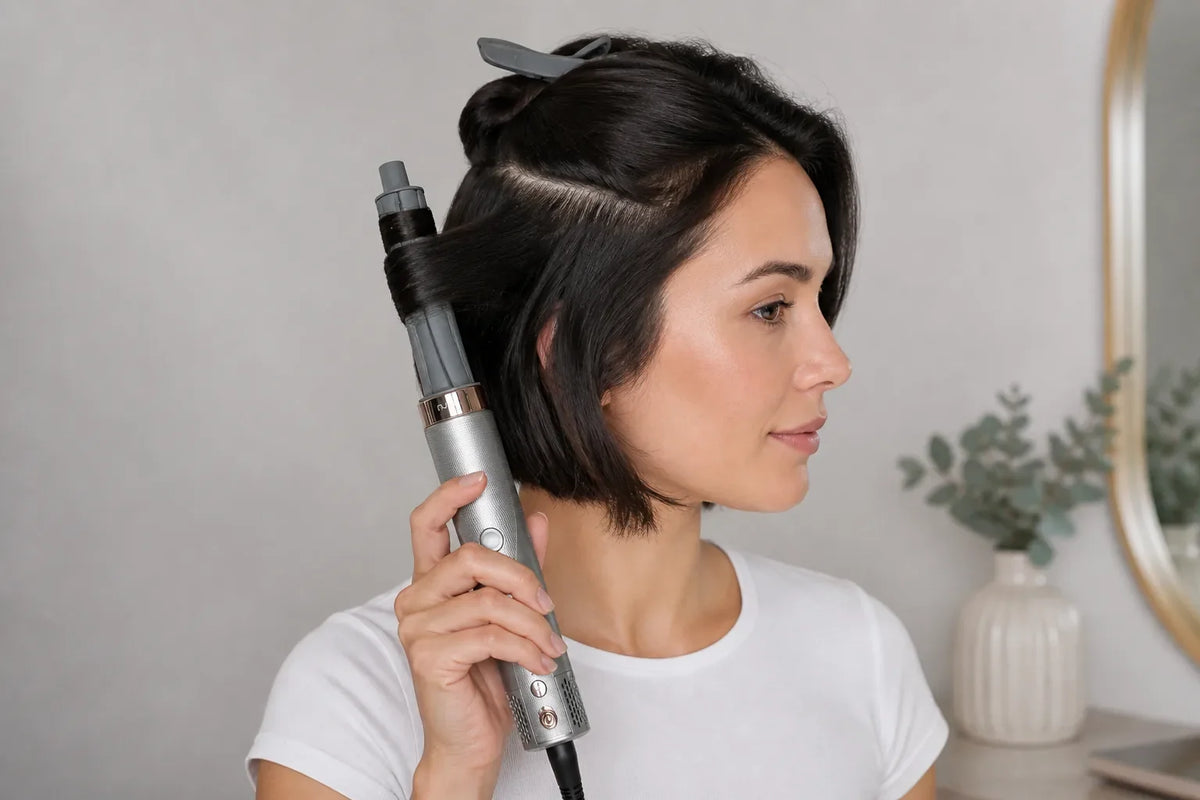
Best Styling Tools for Short Hair: Volume, Waves, and Smooth Finishes
The best styling tools for short hair are not necessarily the smallest or hottest tools on the shelf. They are the ones you can control close to the roots, around the ears, and along the nape without crowding the scalp. A focused dryer attachment, a compact round brush, a manageable curling barrel, and a smoothing option can cover most short-hair goals—from airy volume to a tucked-under bob.
Your haircut matters as much as your hair type. A cropped pixie needs precise airflow and light texture. A chin-length bob benefits from controlled tension and a bend through the ends. A lob gives you more room for soft waves. This guide helps you match the tool to the result rather than buying several devices that solve the same problem.

What makes a styling tool work well on short hair?
Short hair gives you less length to hold, wrap, or pull through a tool. That changes what “easy to use” means. Instead of prioritizing the largest brush or longest barrel, look for control, visibility, and a shape that fits between the roots and ends.
A manageable attachment size
A compact brush can get under a short layer and create lift before the ends slip away. A very large brush may work beautifully on long hair but struggle to make contact with a jaw-length bob. Smaller does not always mean better, though: the attachment still needs enough surface area to create smooth tension without catching or concentrating too much heat in one spot.
Directional airflow
Short hair can puff outward when air hits it from several directions. A focused dryer head lets you aim airflow from roots toward ends for smoothness or upward at the roots for lift. The goal is not maximum air speed; it is putting the air where the haircut needs movement.
Reachable controls and balanced handling
You may change angles frequently around a bob or pixie cut. Controls should remain reachable without shifting your grip, and the handle should feel balanced when you work behind the ears. A lighter, compact powered base can be easier to reposition than several full-size tools.
A cool setting or cool shot
Warm hair is still flexible. Cooling a lifted root, rounded fringe, or curved end can help the shape settle before you release or brush it out. A cool-shot control is especially useful on short hair because the style often depends on a few precisely placed bends rather than a large amount of length.
Best styling tools for short hair by desired finish
| Your goal | Best tool type | Why it suits short hair | Technique priority |
|---|---|---|---|
| Quick drying and direction | Focused dryer head | Reaches the roots and nape without a large brush | Move air in the direction you want the hair to lie |
| Root volume | Compact round-brush attachment | Fits under short sections before the ends release | Lift away from the scalp and cool before releasing |
| Smooth bob or tucked ends | Round brush or smoothing attachment | Creates surface alignment and a controlled end shape | Use gentle tension and turn only through the last part of the section |
| Soft waves | Slim curling barrel | Allows a short section to follow the barrel without excessive wrapping | Alternate directions and leave the ends slightly relaxed |
| Pixie texture and separation | Directional dryer plus fingers or a small comb | Controls tiny sections that cannot wrap around a brush | Use light airflow and shape only where definition is needed |
You do not need every tool in the table. Start with the finish you wear most often. If you usually want a smooth bob with lift, a dryer head and compact round brush may be more valuable than several curling barrels. If you rotate between waves, volume, and a straight finish, an interchangeable system can cover those changes with less counter clutter.

Choose tools by haircut length
Pixie cuts and very short crops
For hair that cannot make a full turn around a brush, precise airflow is usually more useful than a large round tool. Direct roots where you want them to sit, then use your fingers or a small comb to separate the top and fringe. Concentrate on a few intentional areas rather than repeatedly blowing every strand.
If the top is longer, a compact brush can lift it, but keep the attachment away from the scalp and avoid forcing very short hair into bristles. Texture paste or another lightweight finishing product may do more for separation than another round of heat.
Ear-length and chin-length bobs
A bob has enough length for brush tension but not much room for error. A compact round brush can create root lift, soften a blunt edge, or curve the ends. Work with horizontal sections around the back and sides so you can see where the ends are going. For a modern straighter finish, reduce the rotation and guide the brush down rather than rolling the hair tightly underneath.
Lobs and short shoulder-length cuts
A lob offers more room for a barrel or medium brush. It can take a loose bend without becoming visually shorter, and the ends can be turned inward or outward. Use slightly larger sections than you would on a bob, but keep them consistent so one side does not appear fuller than the other.
Bangs, fringe, and face-framing layers
These sections sit close to the eyes and forehead, so precision matters. Start with low or moderate airflow, hold the tool away from the skin, and move continuously. Dry fringe side to side first if you want to reduce a strong part, then direct it into the final shape. Avoid rolling bangs too tightly unless a pronounced curve is your goal.
How to prepare short hair for styling
- Remove excess water gently. Blot with a soft towel rather than rubbing. Short hair may feel quick to dry on the surface while remaining damp at dense roots.
- Detangle from ends upward. Use a wide-tooth comb and light pressure, especially on wet or chemically treated hair.
- Apply compatible protection. Use a heat-protectant product according to its instructions and avoid saturating short hair with heavy formulas.
- Confirm the required moisture level. Each attachment has its own instructions. Do not assume a heated curling component is approved for damp hair simply because a dryer attachment belongs to the same system.
- Create small, clean sections. Clips keep the nape and sides visible and prevent finished hair from falling back into the working area.
The American Academy of Dermatology advises being gentle with wet hair and avoiding excessive heat. It also recommends low or medium settings for conventional flat irons on dry hair. Your tool instructions remain the primary guide for the approved starting condition and controls of each attachment.
Three practical short-hair routines
Routine 1: airy root volume without a rounded helmet shape
- Use a focused dryer head to remove excess moisture and direct roots roughly into place.
- Divide the crown into narrow sections that fit across the brush.
- Place a compact round brush beneath one section and lift it away from the scalp.
- Move steadily through the section instead of holding heat at the root.
- Use cool air if available, then release without pulling the section flat.
For more targeted ideas, see NuvyCare’s guide to adding volume to flat roots. This article stays focused on choosing tools; the linked tutorial goes deeper into root-lift technique.
Routine 2: soft waves on a bob or lob
- Confirm that the section has reached the starting condition required for the curling attachment.
- Clip away the top and begin with a narrow side section.
- Keep the barrel a safe distance from the scalp and guide the section around it without forcing the ends.
- Alternate the direction of nearby sections for a less uniform result.
- Allow each wave to cool before separating it with your fingers.

If you want a full curling tutorial, read how to make straight hair curly. On shorter cuts, the key adjustment is using less hair per section and watching the space around the ears and neck.
Routine 3: a smooth bob with polished ends
- Direct airflow downward while removing moisture to reduce random lift at the surface.
- Use a brush attachment on sections that fit comfortably across its width.
- Maintain gentle tension from roots toward ends.
- Turn the brush slightly only through the last portion if you want a tucked or kicked-out finish.
- Finish lightly; repeated passes can make a bob look flat and overworked.
For a softer, airier finish, the guide to fluffy hair without extra frizz explains how preparation and product weight affect movement.
Common short-hair styling mistakes
- Choosing attachments that are too large: the ends slip away before the tool can shape the section.
- Working with wide sections: outer hairs receive airflow while the center stays damp or uneven.
- Crowding the scalp: short hair does not require the hot or powered part of a tool to touch the skin.
- Over-rolling the ends: a tight curve can make a modern bob look rounder and shorter than intended.
- Using maximum heat by default: section size, tension, direction, and cooling should be corrected before escalating heat.
- Ignoring the nape: unfinished or damp underneath sections can disrupt the outline of the entire cut.
- Brushing before the shape cools: warm waves and lifted roots can fall before they set.
Is a multi-styler a good match for short hair?
A multi-styler is useful when you change finishes often. One day you may want a fast directional dry; another day, root lift, a smooth bend, or soft waves. The advantage is not simply owning more attachments. It is being able to move between those functions on one powered base.
The NuvyCare 5 in 1 Multi-Styler is lightweight and compact, with five attachments for drying, curling, smoothing, and volumizing. Its LayerStream™ airflow system delivers smooth, even heat, while three airflow speeds help you adjust from gentler drying to faster shaping. A Cool Shot control helps curls, waves, and volume settle, and the detachable inlet filter can be removed for routine cleaning.
That mix suits a bob or lob when you want more than one finish without keeping several full-size devices on the counter. For a very short pixie worn the same way every day, a directional dryer and simple finishing tool may be enough. Choose for the haircut and routine you actually have.
Build a short-hair toolkit around your real routine
Explore the NuvyCare 5 in 1 Multi-Styler for one compact system that moves from drying to volume, smoothing, and waves, or browse the full NuvyCare styling collection.
Frequently asked questions
What are the best styling tools for short hair?
The most useful options are a focused dryer head, a compact round brush, a manageable curling barrel, and a smoothing attachment. Choose only the functions needed for your usual finish. Control, attachment size, and safe access around the ears and nape matter more than owning the highest number of tools.
Is a round brush good for short hair?
Yes, when the brush is small enough to fit beneath the section without crowding the scalp. A compact round brush can add root lift, smooth a bob, or curve the ends. Use gentle tension, keep the tool moving, and avoid forcing very short layers into the bristles.
How can I add volume to short hair with a styling tool?
Place a compact brush beneath a narrow crown section, lift the hair away from the scalp, and direct airflow through the section while moving steadily. Use a cool setting or Cool Shot if available, then release gently. Smaller sections usually create more controlled lift than one large section.
Can I create waves in a short bob with an air styler?
Yes, if the bob is long enough for a small section to follow the curling attachment and you follow the manufacturer’s starting-condition instructions. Work with narrow sections, keep the barrel away from the scalp, alternate directions for natural movement, and let each wave cool before separating it.
How large should sections be when styling short hair?
Each section should fit comfortably across the working surface of the brush or barrel without overlapping or slipping off. Short, dense hair often needs narrower sections than it appears to need. Consistent section size gives more even drying, tension, and shape.
How can I style short hair without using excessive heat?
Gently remove excess water, detangle, use compatible heat protection, and begin with a conservative setting. Improve section size, airflow direction, tension, and cooling before increasing heat. Keep the tool moving and stop when the section has reached the desired shape instead of repeating unnecessary passes.
Editorial note: This article provides general hair-care information. Always follow the instructions supplied with your tool and stop if styling causes pain, smoke, a scorched smell, or unusual breakage.
Share:
Hair Straightener Temperature Guide for Every Hair Type
Best Styling Tools for Short Hair: Volume, Waves, and Smooth Finishes