
HAIR TOOLS · BUYING GUIDE
Best Hair Straightener for Frizzy Hair: Features That Matter
The best hair straightener for frizzy hair is not simply the hottest tool or the one that promises the glossiest finish. It is a straightener whose operating method, controls, working area, and handling match your hair's starting condition—and let you create an even result without repeatedly working the same section.
This guide turns “anti-frizz” marketing into questions you can actually check. It does not rank products through hands-on testing, prescribe one temperature, or promise that a tool can permanently change how hair responds to weather.

The Quick Answer: Control Matters More Than an “Anti-Frizz” Label
A straightener can temporarily align hair into a smoother shape. Whether the result looks polished depends on more than heat: starting moisture, section size, tension, pass speed, hair condition, finishing products, and humidity all matter. A shopping page cannot know those variables for you.
For frizz-prone hair, look for a method you can repeat consistently. The tool should state whether it is designed for dry or damp hair, offer controls that are easy to understand, hold or guide a manageable section evenly, and feel comfortable enough that you do not rush. It should also come with clear electrical, cleaning, storage, and warranty information.
That is a more useful definition of “best” than maximum temperature. The American Academy of Dermatology advises limiting excessive heat, using low or medium heat where possible, and using heat tools less frequently. Its hair-styling guidance is a helpful reminder that a temporary smooth finish should not come at the cost of escalating exposure.
First, Define What “Frizzy Hair” Means in Your Routine
Frizz describes appearance, not one universal hair type. It may look like a fine halo at the crown, flyaways around the hairline, rough ends, loss of curl definition, or a straight style that expands when the weather changes. Several patterns can appear at once, but the tool cannot solve every cause by itself.
Surface flyaways with an otherwise smooth shape
If the main issue is a small halo rather than an uneven overall shape, repeatedly straightening the full length may be unnecessary. You may value controlled access near the surface, a moderate setting, and a finish that does not collapse all volume. Hair care and a light finishing step can matter as much as the appliance.
Frizz that returns in humid weather
A smooth result immediately after styling is not evidence that it will ignore humidity. The existing NuvyCare guide to managing frizz in humid weather covers preparation and finish choices. This article stays with the purchase decision: do not pay a premium solely for an undefined weather-proof promise.
Roughness linked with fragile or breaking hair
A stronger or hotter straightener is not the automatic answer. The AAD notes that damaged hair is fragile and that breakage can leave hair looking frizzy. If your hair is breaking, thinning, or changing unexpectedly, reduce stress and seek professional advice rather than using a smoother appearance to hide the problem. Its guide to stopping hair damage recommends the lowest heat setting and less frequent heat-tool use.
Texture you want to keep, not erase
Some shoppers want smoother curls or waves rather than pin-straight hair. Define the endpoint before choosing the tool. A device optimized for strong straightening may remove more shape than you want, while a technique that preserves bend may need lower tension, a different tool, or no straightener at all. “Frizz control” should not be treated as a demand to flatten natural texture.
Best Straightener for Frizzy Hair: 7 Features to Examine
1. A starting-moisture rule you can follow
Conventional flat irons are generally intended for dry hair. A purpose-built wet-to-dry airflow straightener follows a different workflow and may be intended for towel-dried hair. Never assume that a vent, a wide arm, or the words “steam” and “wet” make a hot tool safe for damp hair. The manual for the exact model should state the permitted starting condition.
This decision can narrow the category immediately. If you prefer to air-dry or blow-dry fully before straightening, assess dry-hair tools. If you want to combine drying and straightening, compare purpose-built damp-hair models and consider how wet your hair normally is when you begin. Our guide to wet-to-dry straighteners explains that category without turning it into a recommendation for everyone.
2. Settings that are understandable—not merely numerous
Useful control means you can identify and reproduce a setting. Look for clearly labeled levels, a readable indicator, and controls you will not press accidentally while styling. A very high maximum does not prove better smoothing and should not become your default.
Hair strand thickness, density, curl pattern, condition, and product buildup can change how a section responds. Start conservatively and judge a small test section. The existing hair straightener temperature guide covers setting selection in depth; this buying guide does not create a competing temperature chart.
3. A working surface that guides hair evenly
With a plate tool, examine alignment, edge shape, and whether the plates meet evenly without snagging. With an airflow straightener, examine the open channel, the surfaces that create tension, and where air exits. The mechanisms differ, but the purchasing question is similar: can the tool guide a section without forcing you to twist your wrist or clamp harder?
Marketing terms such as ceramic, ionic, floating, tension, and airflow describe parts of a design; none independently proves an outcome on your hair. Look for a clear diagram or close product view, then read how the manufacturer tells you to position and move the device.
4. A usable section width
Wider is not automatically faster. A wide working area can cover more hair, but dense or irregular sections may not receive even tension. A narrow tool offers placement control yet may increase the number of passes across long or dense hair. Choose a width you can feed consistently.
Think about your difficult areas: short layers around the face, roots with strong texture, or ends that need a gentle curve. Compare the active area with the outer shell. A bulky border can make access different from the dimensions advertised for the working surface.
5. Predictable movement and visibility
You should be able to see where hair enters and leaves the tool. That visibility helps keep sections separate and reduces accidental overlap. A shape that looks elegant on a product page may still obscure the roots or make it difficult to tell whether the hair is centered.
Do not assume more pressure will correct uneven contact. If a section is too wide, tangled, or poorly aligned, reset it. A device that works with controlled tension and a continuous movement is easier to evaluate than one that encourages repeated clamping on the same spot.

6. Handling that remains comfortable through the full routine
Weight, balance, grip, hinge resistance, cord swivel, and control placement become more important when a routine takes many sections. Review dimensions and weight, but also look at where that weight sits. A concentrated base can feel different from an evenly balanced body with the same total number.
Check cord length against your actual outlet and mirror position. A long cord is not helpful if it crosses a sink, while a short one can encourage an unsafe extension setup. Keep hot electrical tools and cords away from water and follow local electrical requirements.
7. Ownership information you can verify
Before purchase, find the full manual, electrical rating, included accessories, care instructions, auto-shutoff details, warranty terms, and seller's return conditions. Confirm voltage compatibility for the country where you will use it. A travel bag or compact shape does not establish dual voltage.
Also check what “included” means. A heat-resistant mat can support safe placement, but it does not make every countertop heatproof or replace the manual's cooling instructions. Accessories shown in lifestyle images may be styling props rather than box contents.
Match the Straightener to the Point Where Your Result Breaks Down
| What you notice | Ask before buying | Do not assume |
|---|---|---|
| Smooth roots, puffy ends | Can you reduce tension and shape the ends without pausing? | Higher heat will correct every rough end |
| Uneven patches after one pass | Can you see and center a consistent section? | A wider tool always means even coverage |
| Many repeat passes | Is the starting moisture, section size, or pace wrong for the tool? | More passes are the intended solution |
| Hair looks flat | Can you preserve root direction and choose a softer endpoint? | Smooth must mean pin-straight |
| Style expands outdoors | What preparation and finishing routine will accompany the tool? | The appliance can make hair humidity-proof |
If dense hair and section count are the main obstacles, see the separate straightener guide for thick hair. Its focus is density, strand width, and an extended technique routine. This article instead uses frizz appearance and routine failure points to frame the buying decision.
A Practical Scorecard for Comparing Your Shortlist
Create a table with each model in a column. Mark an item “confirmed” only when the official page or manual answers it. Use “unknown” instead of filling gaps with a retailer headline or a review of a different model.
- Required workflow: dry hair, towel-dried hair, or another explicitly permitted condition.
- Desired finish: pin-straight, smooth with body, or polished natural texture.
- Control: settings you can read, select, and repeat.
- Working area: suitable for your common section size and shortest layers.
- Handling: weight, balance, visibility, grip, cord position, and storage.
- Electrical fit: voltage, plug, rated frequency, and location-specific support.
- Ownership: manual, care, warranty, returns, and confirmed box contents.
Then remove features that do not help your defined goal. If you always style dry hair, a damp-hair workflow may add no value. If you want to preserve waves, the most aggressive straight finish may be the wrong endpoint. A shorter shortlist with verified tradeoffs is more useful than a generic top-ten ranking.
Where the NuvyCare Wet-to-Dry Hair Straightener Fits
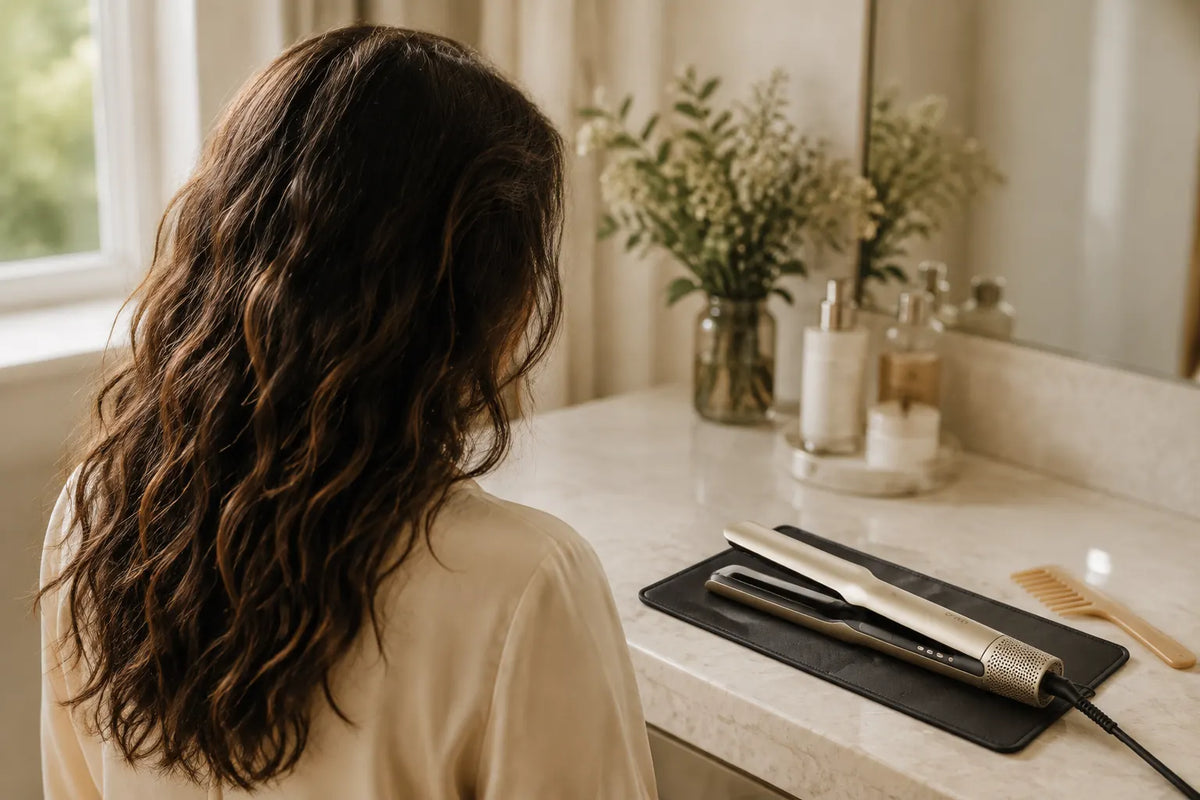
The NuvyCare Wet-to-Dry Hair Straightener is positioned for a damp-to-smooth routine. Its current product page describes high-speed airflow and temperature control designed to dry, straighten, and smooth in one tool stage. The listed box contents are the straightener and a heat-resistant mat.
It is relevant if combining the drying and straightening stages matches your routine. It is not evidence that every kind of frizz will disappear, that one setting suits every hair type, or that heat exposure becomes consequence-free. Follow the supplied manual and begin with the least intensive effective combination for your hair.

One important purchase gate is electrical compatibility. The live page currently lists 220–240V and 50–60Hz; verify the exact unit, plug, and intended market with NuvyCare before ordering or traveling. Do not infer universal or dual-voltage use from the product's shape. Review the current specifications and instructions because product details can change.
Final Decision
The right straightener should solve the bottleneck you actually have: inconsistent sections, an unsuitable starting-moisture rule, hard-to-read controls, awkward access, or a routine that demands too many repeat passes. It should also let you choose a finish that looks smooth without automatically erasing movement and volume.
Choose from documented features, not an anti-frizz badge. Use the lowest effective intensity, limit unnecessary repetition, and combine the appliance with sensible preparation and finishing choices. If hair is breaking, thinning, or your scalp is uncomfortable, pause heat styling and seek qualified advice rather than buying a more powerful tool.
Frequently Asked Questions
What type of hair straightener is best for frizzy hair?
The useful category depends on your starting condition and goal. Compare dry-hair plate tools with purpose-built damp-hair airflow tools, then check control, working area, handling, electrical compatibility, and care instructions. No technology label is best for every frizz pattern.
Does a hotter straightener reduce frizz better?
Not automatically. More heat increases exposure and may not fix poor sectioning, uneven tension, or unsuitable starting moisture. Begin conservatively, test one small section, and use the lowest setting that produces the intended result with the model's approved technique.
Should I straighten frizzy hair when it is wet or dry?
Follow the exact tool's instructions. Conventional flat irons are generally used on dry hair, while a purpose-built wet-to-dry device may permit towel-dried damp hair. Never assume a hot tool is suitable for wet hair because it has vents or a wide body.
Can a hair straightener permanently stop frizz?
No. Heat styling temporarily reshapes the hair's appearance. Hair condition, natural texture, washing and conditioning, finishing products, and humidity can all affect what happens later. Be cautious of undefined permanent or weather-proof claims.
Are ceramic or ionic straighteners always better for frizzy hair?
No single material or marketing term proves the complete result. Examine how the whole tool manages temperature, alignment or airflow, section control, handling, and the workflow you will use. Model-specific evidence matters more than one label.
Is the NuvyCare Wet-to-Dry Straightener suitable for a US outlet?
The current product page lists 220–240V and 50–60Hz. Standard household voltage and plug systems vary by country, so confirm the exact unit and intended market with NuvyCare before purchase. Do not assume dual-voltage compatibility or rely on a simple plug adapter.
Share:
Foil Shaver for Face: Who It Suits and What to Look For
Best Hot Air Brush for Fine Hair: What to Look For